
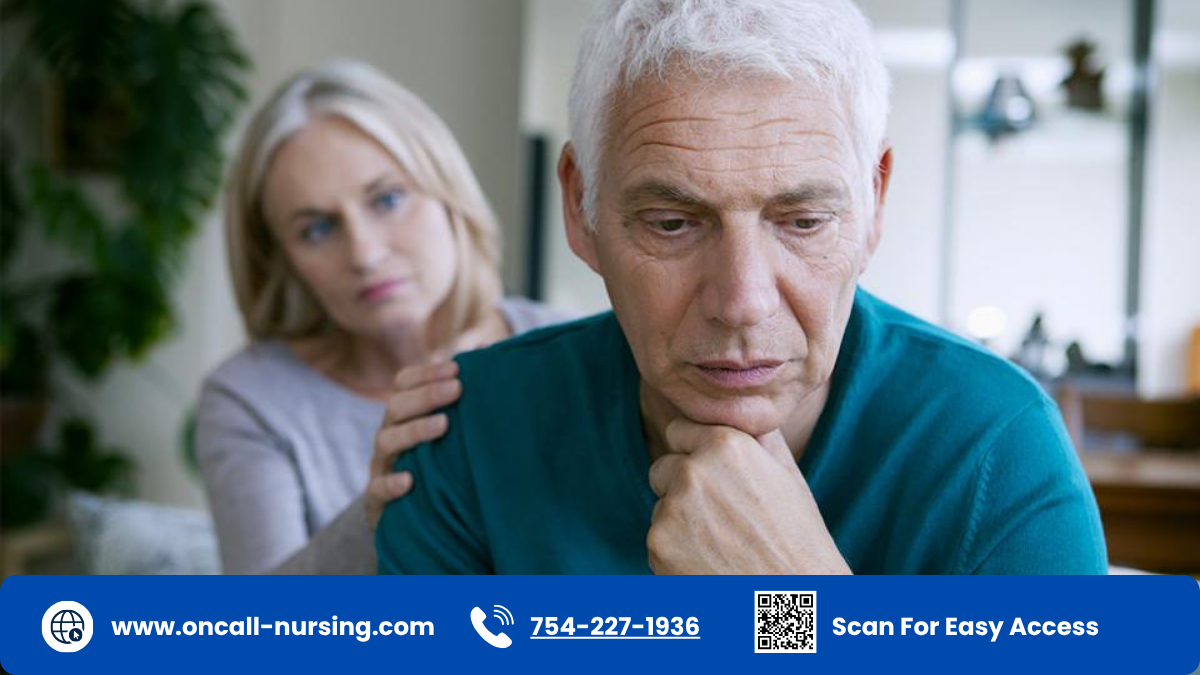
Dementia care at home is one of the most important decisions families face when a loved one begins showing signs of memory loss.
Dementia is more than forgetfulness, it’s a progressive condition that affects how a person thinks, behaves, and experiences everyday life. What may begin as small, easily overlooked changes, like repeating questions, missing appointments, or moments of confusion, can gradually evolve into more serious challenges that impact safety, independence, and emotional well-being.
For many families, this shift can feel overwhelming. You may find yourself stepping into a caregiving role without preparation, managing medications, ensuring safety, and constantly worrying about what might happen next.
This is where On Call Nursing makes a meaningful difference. With professional, concierge nursing and personalized in-home dementia care, your loved one can remain in the comfort of home, surrounded by familiarity, routine, and the emotional security that is essential to their well-being.
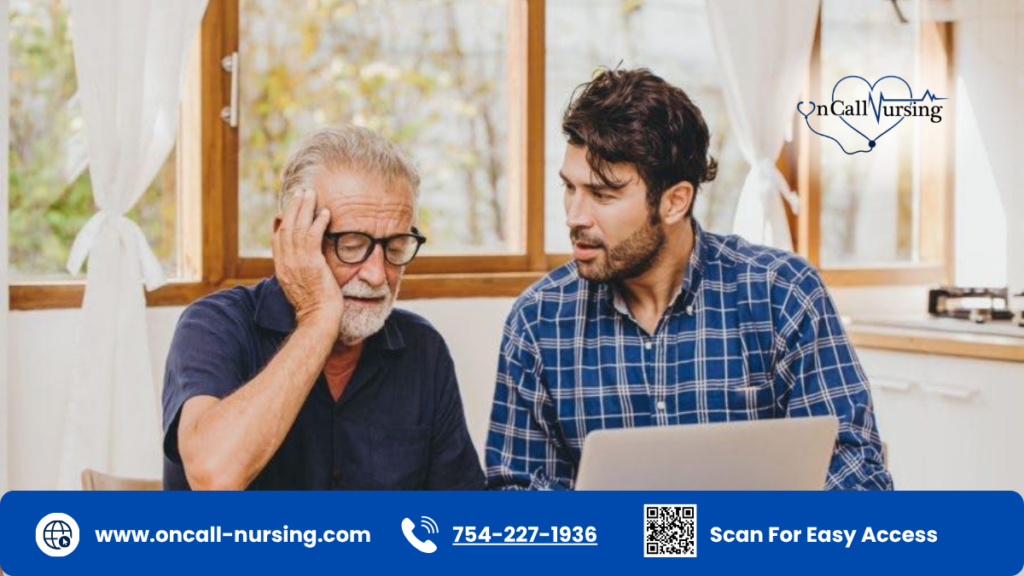
WHAT IS DEMENTIA?
Dementia is a general term used to describe a decline in cognitive function severe enough to interfere with daily life. The most common form is Alzheimer’s disease, but there are several types, each affecting the brain differently.
Dementia impacts multiple areas of functioning, including:
- Memory and recall
- Thinking and decision-making
- Communication and comprehension
- Mood and emotional responses
- Ability to perform everyday tasks
As the condition progresses, individuals often require increasing levels of memory care and senior care support. Without proper guidance, even simple daily activities can become confusing, frustrating, and unsafe.
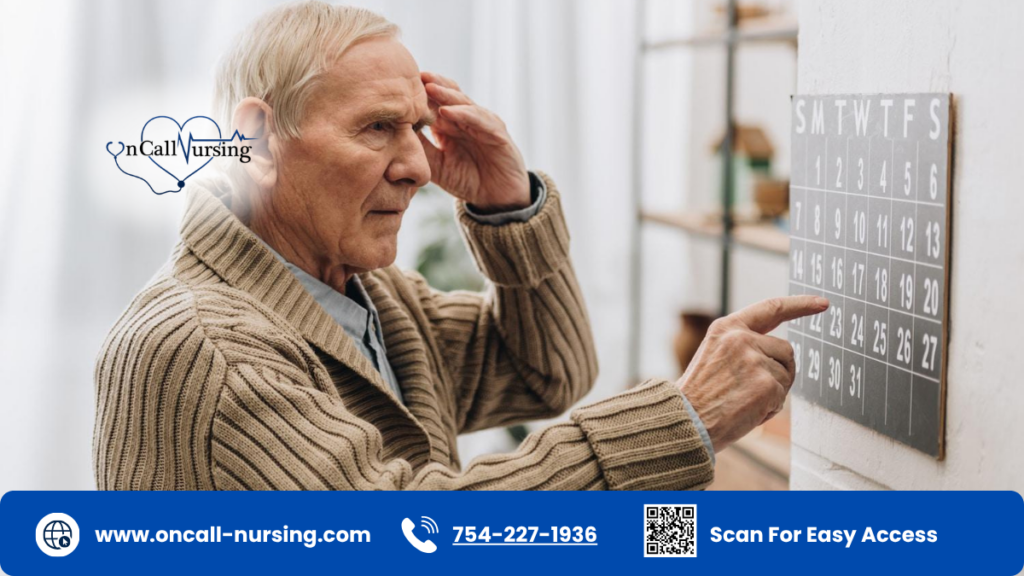
COMMON SIGNS OF DEMENTIA
Recognizing early warning signs allows families to seek dementia care at home before risks escalate.
1. Memory Loss That Disrupts Daily Life
Forgetting recent conversations, repeating questions, or relying heavily on reminders.
2. Confusion and Disorientation
Getting lost in familiar environments or losing track of time.
3. Difficulty Completing Familiar Tasks
Struggling with cooking, medication management, or basic routines.
4. Changes in Mood and Personality
Increased anxiety, irritability, withdrawal, or depression.
Early intervention with in-home dementia care can significantly improve outcomes and help prevent emergencies.
WHY DEMENTIA CARE AT HOME MATTERS
Without proper in-home dementia care, seniors face increased risks such as:
- Falls and injuries
- Medication errors
- Wandering or getting lost
- Malnutrition and dehydration
- Emotional distress and isolation
But beyond physical safety, there is something even more important – preserving dignity.
At On Call Nursing, care goes beyond supervision. It focuses on maintaining independence, emotional well-being, and a sense of identity for every patient.
With proactive concierge nursing, small changes are identified early, helping prevent hospitalizations and ensuring your loved one receives the right care at the right time.
STAGES OF DEMENTIA
Understanding the progression of dementia helps families prepare for evolving care needs.
Early Stage
Mild memory loss, occasional confusion, still largely independent.
Middle Stage
Increased confusion, difficulty with daily tasks, behavioral changes. Structured care becomes essential.
Late Stage
Severe cognitive decline, limited communication, and full dependence on caregivers.
Each stage requires a different level of senior care, and having the right support system ensures continuity and stability.
HOW CONCIERGE NURSING SUPPORTS DEMENTIA CARE
At On Call Nursing, care is personalized, proactive, and designed around your loved one’s unique needs.
✔️ Daily Routine Support
Structured routines reduce confusion and anxiety.
✔️ Safety Supervision
Fall prevention, behavior monitoring, and a secure home environment.
✔️ Ongoing Health Monitoring
Early detection of subtle changes before they become serious issues.
✔️ Meaningful Companionship
Emotional connection, patience, and human interaction.
✔️ Family Coordination
Seamless communication with healthcare providers and loved ones.
This level of dementia care at home ensures not just safety, but comfort, dignity, and quality of life.
YOU DON’T HAVE TO NAVIGATE THIS ALONE
Caring for a loved one with dementia can be emotionally and physically overwhelming.
But you don’t have to do it alone.
With the support of On Call Nursing, your loved one can remain safe, comfortable, and cared for, while you gain peace of mind knowing they are in capable, compassionate hands.
Because at the end of the day, peace of mind starts with knowing someone is there.

Don’t wait until small signs become serious risks.
Schedule a personalized consultation with On-Call Nursing today.
Scan the QR code to book your free assessment.
FAQ
What is dementia care at home?
It is personalized care that supports seniors with memory loss while allowing them to remain safely at home.
When should I consider in-home dementia care?
When safety, memory, or daily tasks become difficult to manage independently.
Can dementia patients stay at home?
Yes—with proper in-home dementia care and concierge nursing.
What makes On-Call Nursing different?
It provides proactive, personalized, concierge-level care focused on safety, dignity, and quality of life.